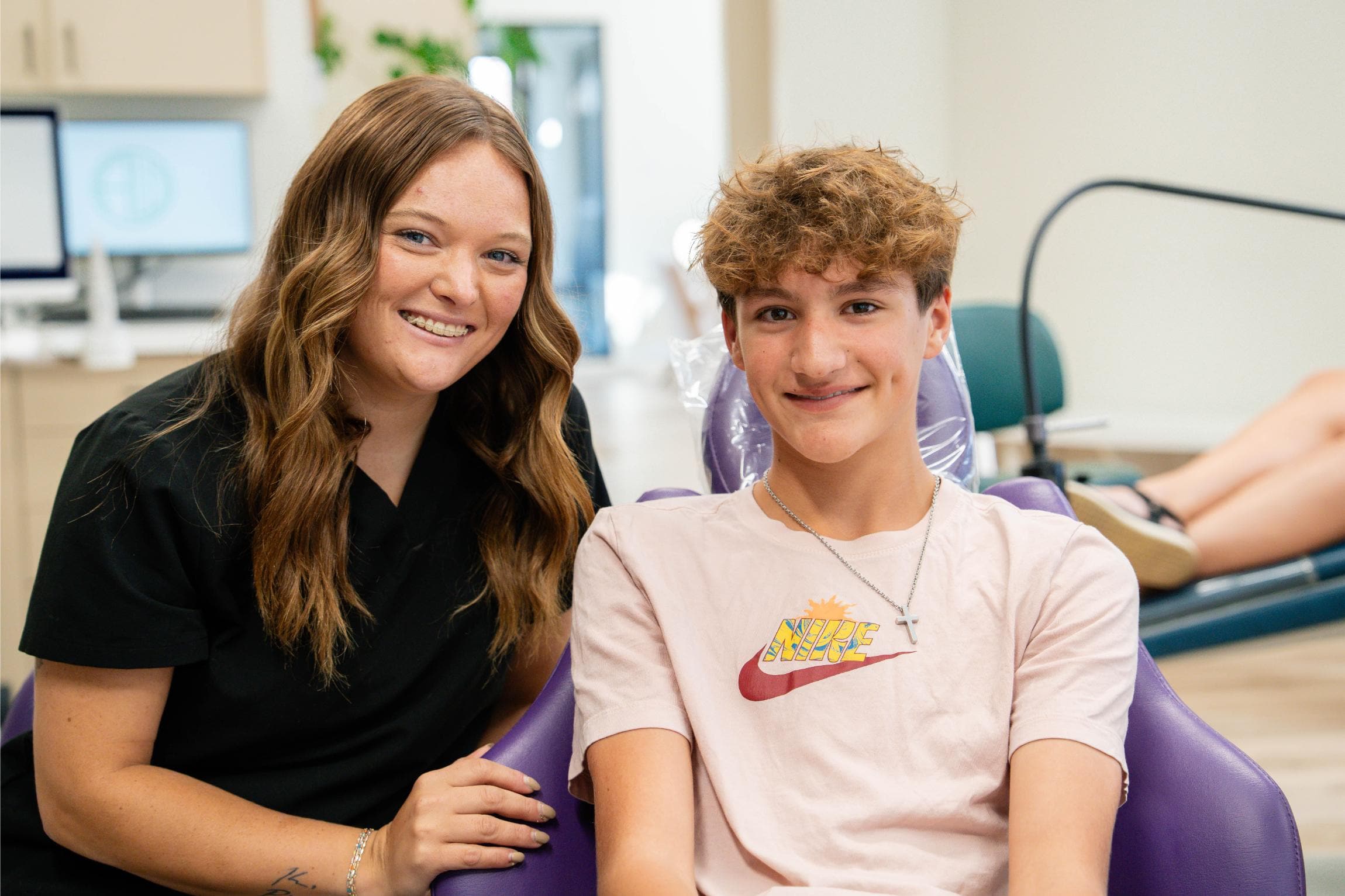
What Is Orthodontics for All Ages?
Orthodontics for all ages refers to braces, clear aligners, and bite correction available from childhood through the senior years. At AW Orthodontics, serving families in Lebanon and Zionsville, we help kids, teens, and adults straighten teeth, fix bite issues, and improve long-term oral health. No one is ever too old for a healthier, straighter smile, and your smile journey can start at any stage of life.
Treatment goals look similar across age groups: better alignment, a balanced bite, and easier daily cleaning. What changes is the approach. Kids as young as seven can benefit from an early evaluation to spot growth issues. Teens often get treated as adult teeth come in. Adults choose care for cosmetic reasons, jaw comfort, or to fix shifting that’s happened over time.
Whatever your age, Dr. Ariel Wong, DDS, our board-certified expert, builds a smile plan that fits your stage of life. Families across Lebanon and Zionsville trust her to make every step feel personal.
How Does Orthodontic Treatment Work at Every Age?
Orthodontic treatment follows four main steps at every age: a free consult and exam, a custom smile plan, active treatment with braces or aligners, and a retention phase with retainers. The tools and timeline shift based on age and dental needs, but the path stays the same. Most families finish active treatment in 12 to 24 months. You can learn more about our braces and clear aligner options before your first visit.
What Happens at the Free Consult and Exam?
Your first visit includes digital scans (no gooey molds), photos, and a bite check. Dr. Wong reviews growth patterns, tooth position, and any concerns you bring up. Families in Lebanon and Zionsville often tell us this first step feels relaxed and unhurried.
What Goes Into a Custom Smile Plan?
After the exam, we build a plan based on your age and goals. Kids may need a different approach than adults. We walk you through options, timing, and cost so you know what to expect at every turn.
What Happens During Active Treatment?
This is the working phase. Braces or clear aligners move teeth into place. You’ll visit our friendly office every 4 to 8 weeks, or use DentalMonitoring® for remote check-ins between visits.
How Does the Retention Phase Work?
Once teeth are in their new spots, retainers hold them there. Wearing your retainer as directed keeps your great results for life. This final phase protects all the progress you’ve made.
What Is Phase 1 Treatment for Kids?
For younger children, we sometimes recommend Phase 1 treatment. This early step guides jaw growth, makes room for adult teeth, and can prevent bigger issues later. A second phase often follows once all adult teeth come in.
Benefits of Orthodontic Treatment for Each Life Stage
Every age brings its own wins from orthodontic care. Here’s what each group can expect:
- Children (ages 7 and up): Early treatment guides jaw growth, creates space for adult teeth, and can prevent more involved care down the road. Catching issues early often means a simpler smile plan later.
- Teens: Peak growth years are a great window for braces or clear aligners. Teeth shift more easily, and treatment fits naturally into the school and sports schedule.
- Adults: Straightening teeth at any age improves appearance, confidence, and bite function. Adults often choose clear braces or clear aligners for a low-key look at work or social events.
- All ages: Straight teeth are easier to brush and floss, which lowers the risk of decay and gum issues over time.
A balanced bite also takes pressure off the jaw joints. That can mean less soreness, fewer headaches, and smoother chewing for years to come. The American Association of Orthodontists notes that properly aligned teeth and jaws make brushing and flossing more effective, which supports better long-term oral health at every stage of life. Families in Lebanon and Zionsville see these benefits play out across generations.
Comparing Treatment Options by Age Group
Families have more choices than ever. Here’s a quick look at how the main options compare:
What Are Metal Braces?
Modern stainless-steel braces are smaller and smoother than the ones you may remember. They work for nearly every case and are a strong choice for kids and teens. Many families in Lebanon and Zionsville still pick them for their reliability.
What Are Clear Braces?
Clear braces use tooth-colored ceramic that blends with your smile. Teens and adults often pick them when they want braces that don’t stand out in photos. You can explore our clear braces options to see if they suit your goals.
Are Clear Aligners Right for Me?
Clear aligners are removable trays you swap out every week or two. Adults like them because they fit into work meetings and dinners without anyone noticing. They’re a popular choice for busy schedules.
How Does DentalMonitoring® Work?
This app-based tech lets Dr. Wong check your progress between visits. You’ll spend less time in the chair and still finish on schedule. It’s especially handy for families juggling school, work, and activities.
What Affects the Cost of Orthodontics for All Ages?
Orthodontic cost depends on five main factors: how complex the case is, which appliance you choose, how long treatment lasts, your age stage, and your insurance coverage. Simple cases with metal braces typically cost less than complex cases needing clear aligners or longer timelines. At AW Orthodontics, we offer flexible payment options to fit your family budget, and families in Lebanon and Zionsville appreciate the clear pricing.
How Does Treatment Complexity Affect Cost?
A small gap takes less time and fewer materials than severe crowding or a major bite issue. The more movement needed, the more your plan will cost.
How Does Appliance Type Affect Cost?
Metal braces usually sit at the lower end of the range. Clear braces and clear aligners often cost a bit more because of the materials and lab work involved.
How Does Treatment Length Affect Cost?
Shorter plans mean fewer visits and lower costs. Most cases run 12 to 24 months, though early treatment for kids may be shorter.
How Do Age and Phase Affect Cost?
Phase 1 treatment for kids is usually a smaller investment than full treatment in the teen or adult years. Catching issues early can save money later.
How Do Insurance and Payment Plans Help?
Many families use orthodontic insurance benefits, HSAs, or FSAs to offset cost. We also offer flexible payment plans so monthly numbers feel manageable for households in Lebanon and Zionsville.
Who Is a Good Candidate for Orthodontic Treatment?
Almost anyone with healthy teeth and gums can be a candidate. Here’s how it breaks down by age:
- Children: The American Association of Orthodontists recommends a first orthodontic check by age 7. Most kids won’t need braces yet, but Dr. Wong can spot early signs of crowding, crossbites, or jaw issues.
- Teens: This is the most common age for braces or clear aligners. Teens with crowding, gaps, overbites, underbites, or crossbites are usually great candidates.
- Adults: It’s never too late. Adults choose treatment for cosmetic reasons, to fix shifting after old braces, or to relieve bite-related discomfort.
What Are Common Signs You May Need Orthodontic Care?
- Crooked, crowded, or overlapping teeth
- Gaps between teeth
- Trouble biting or chewing
- Jaw clicking, soreness, or fatigue
- Teeth that don’t meet evenly when you bite down
- A smile you’d love to feel more confident about
If any of these sound familiar, a free consult is the easiest next step. Families across Lebanon and Zionsville are always welcome to schedule a visit.
Frequently Asked Questions About Orthodontics for All Ages
At what age should a child first see an orthodontist?
The American Association of Orthodontists recommends a first orthodontic visit by age 7. By this age, enough adult teeth have come in for Dr. Wong to spot growth or bite issues early. Most kids won’t need braces right away, but an early check helps us plan the best timing if treatment is needed. Parents in Lebanon and Zionsville often book this first visit for peace of mind.
Is it too late to get braces as an adult?
Not at all. Teeth can be moved at almost any age, as long as your teeth and gums are healthy. Many adults choose clear braces or clear aligners for a low-key look. Adult treatment can improve appearance, fix bite issues, and make daily brushing and flossing easier.
How long does orthodontic treatment take?
Most cases run 12 to 24 months, though timing depends on your goals and the complexity of your case. Mild issues may wrap up in under a year, while more involved plans take longer. Dr. Wong will give you a clear timeline at your free consult.
Are clear aligners as effective as braces?
For many cases, yes. Clear aligners work well for mild to moderate crowding, gaps, and bite issues. Severe or complex cases may still need braces for the best results. At your free consult, we’ll let you know which option fits your smile goals.
Does orthodontic treatment hurt?
Most families feel mild soreness for a day or two after braces are placed or when switching to a new aligner tray. This usually fades quickly. Today’s low-profile brackets and smooth aligners are designed for comfort, and any tenderness is short-lived. Families in Lebanon and Zionsville tell us the experience is far easier than they expected.